Thursday, July 27, 2006

What's Worth Fighting For in Our Schools


Ok I have never run an online discussion about a book, if anyone wants to email me walterbrown@gmail.com with suggestions I would much appreciate it.

I picked a couple of quotes from the book, shared a personal reflection or classroom experience inspired by the quote and tried to keep the discussion positive. I am not suggesting you need to keep the conversation positive however remember it is easier to complain than to see the value in something.

Chapter 1

There is simply not enough opportunity and not enough encouragement for teachers to work together, learn from each other, and improve their expertise as a community. (p.1)

Currently I am blessed with a situation where inter-visitation is encouraged, and time is set aside for team (grade level) planning. Although not everything is best done in teams having the option really lends to excellent morale in the school. I am not at all concerned with how I am perceived by my administrators, however each day I come to work and think to myself what will my teammates (specifically the English or Math teacher) think of me when they visit my class today?

However I have been in schools where this was discouraged. Using your “prep time” for professional development was something one administrator wanted to write me up for.

"This simultaneous bottom-up and top-down tension in bringing about reform is a symptom of fundamental dilemmas and problems in bringing about educational change." (p. 2) The authors identify six basic problems in this struggle:
1. Overload

2. Isolation
3. "Groupthink"
4. Untapped Competence (and the neglect of incompetence)
5. Narrowness in the teacher's role (and the problem of leadership)
6. Poor Solutions and Failed Reform

When I read this section so many things rang true. I always just neglected the incompetent teachers, and I personally felt like I was never given an opportunity to show I was competent. Decisions always seemed top down, and whenever a new reform was passed down from the incompetent top I was always very cynical and waited for the reform to “blow over”. I would publicly “yes” all the reformers to death to their faces then shut the door, and do what I had always been doing with my students. The conversation I had with my peers rarely focused on pedagogy. I was afraid to show my lack of understanding of the art of teaching. I honestly always thought the people I worked with were so much more advanced as teachers than I.

This first chapter really pointed out so many things that I have experienced. I didn’t know it at the time but all schools are not like this. My currently teaching assignment is one of an empowered staff that work alongside a supportive administration.

Chapter 2

"Many staff developments take the form of something that is done to teachers rather than with them, still less by them." (p17)

“Sitting through” staff development and “engaging in” staff development are two completely different things. I have “sat through” staff development. I been attentive and listened as teachers openly challenged the facilitator exclaiming “yeah but this will never work in my class” or “I do this already in my class I just don’t have a name for it.” I really became disenchanted with professional development because of all these negative experiences. Looking back on the experience, most of the concepts the facilitators were trying to get across were extremely progressive and valuable. However the facilitators forgot to take into account the “teachers” and people who were not ready to change their practice until the culture of the building changed.

Engaging in professional development is something completely different. Actively listening, reflecting on the experience, applying the new practices to lessons, adapting the suggested practices to fit your style and then freely becoming immersed in the vernacular as to better converse with your colleagues is something far more than “sitting through” a PD session. Professional development sessions are finite learning experiences but when effective are starting points for new innovations pedagogy that become common traits of a school culture.

"You cannot understand the teacher or teaching without understanding the person the teacher is. And you cannot change the teacher in fundamental ways without changing the person the teacher is, either." Teaching is a function of the lives, the biographies, and the people the teachers have become. (p25)

Ok, I struggle with this all the time. I am undoubtedly a workaholic. I have often been accused of neglecting other obligations because my mind is “always on school.” I often get frustrated when others are not at the same level of passion about teaching as me. Just because a colleague does not appear to me to be giving 110% of them self (even during the summer) does not mean they are not good teachers. I personally really have to work on this.

Chapter 3

“There are four kinds of ‘collegial relations amongst teachers.’ The first three are: (1) scanning and storytelling (2) help and assistance (3) and sharing. Each of these relations may be found in either individual or collaborative school sites, but each is relatively unreliable to affect long term changes within a school. The authors write at the most effective form of collegial relationships are ones that concern "joint work." (p.47)

In the past I’ve experienced the first three forms of professional relationships described. The creation of a ‘joint work’ relationship where all members carry equal weight in decision making, and all members are respected as voice bearers in the conversation has still eluded me. I am assuming that less pointing of fingers as to the failures of the school and more acceptance of the teacher responsibility in a school are the litmus test for a successful school environment.

I am hoping to becaome more involved in “joint work”. Unfortunately we as a team do slip back into placing blame on individuals who do not “buy into” the philosophy of our school. We point fingers and avoid working out the problems that distract us from “joint work”. Our team has set protocols that enable a group meeting to be a venue of the open sharing of ideas.

One thing that I am still questioning is; how do we know where our school is at? If you ask me, all schools upon reflection, especially anyone who is reading a blog about education over their summer break is in a “moving school environment”. The moving school environment is one that is collaborative and more open to other ideas. Those teachers involved in moving schools tend to be more helpful to colleagues, and many are not afraid to seek advice from administrators. Does everyone have to be a total teacher in a total school?

Chapter 4


1.Teachers need to develop and be certain of their personal values and goals in teaching. Once teachers have a clear understanding of what they want to accomplish in the classroom, the burdens and the complaining that is often associated with teachers can be diminished by focusing on what is important. Teachers thus need to be reflective in their thoughts and their practice by taking time to journal, conduct discussions with colleagues and students and to give evaluations so that they can ascertain whether their values and goals are being reached. And then once their values and goals are identified they need to be lifelong learners and participate in activities that help them reach those goals.

2. Teachers need to be risk-takers and to take steps, no matter how small, to foster change and growth. The authors are asking the teachers to be the first ones to try something for the good of the others at their school site.

3. This book encourages teachers not to be hermits and “balkanize” or segregate into their own teaching departments. They encourage teachers to share their ideas and experiences and especially how they have risked so that all can benefit from the knowledge of the staff. Teachers are to be leaders no matter what official role that they serve. Every teacher is an expert at something and that experience needs to be shared for the common good. Teachers need to support all their colleagues including their administrators.

4.Teachers should understand that their development is tied hand to hand with the development of their students. When teachers continue to improve and have desire to increase their realm of knowledge, the students will benefit from this and more development with occur in them.


All of these points put alot of the reform possiblilities and failures of schooling back on the classroom teacher.

Tuesday, July 18, 2006

No Sleep 'Til Brooklyn

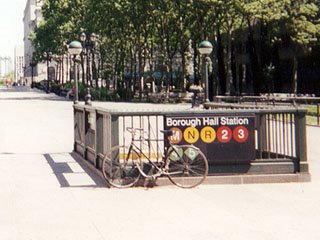
The Montessori Summer Program concluded this past Friday on the plaza in front of Borough Hall in Brooklyn. We all go into teaching searching for those fulfilling moments. Some teachers receive letters or visits from former students letting us know the impact we had on their lives. Friday was one of those experiences that will be stored in the memory banks of the students and teachers for years to come. I know personally next year around February, when I’m beginning to loose faith in the system, I will look back and reflect on this experience.

Currently I am reading “Whats Worth Fighting for in Our Schools” and at first glance the answer is simple to me ‘programs like the one we had this summer.’ It really was something special.

OK Brown, What was so special? Really nothing, the teachers took 48 students who for one reason or another were lacking in appropriate credit and decided to work 8 to 10 hours a day studying the Brooklyn Bridge. The intensive research was compiled into a book, published, and then distributed to the public by the students on the bridge. They also received instant feedback by on the booklets at http://www.brooklyn-bridge.blogspot.com/ .

Using the model of backward design by Grant Wiggins as abbreviated at the ISA Summer Institute during the Terry Borne curriculum workshop the teachers of the Montessori Small Learning Community developed an interdisciplinary masterpiece.

In a moment of complete serendipity I found myself sitting aside Jonathan Katz at dinner, and then attndeding his thematic workshop applying quadratic equations to the design of suspension bridges just 4 days prior to the launch of our project. He outlined how to get students to create blueprints then build their own models of suspension bridges. The teachers had been throwing around the idea of how to have the students create a model of a bridge but Katz really gave us the 'nutz and boltz' on how to accomplish this task.

The experience was incredible. We as a whole (teachers and students) applied quadratic formulas to graph parabolas and create blueprints for our own suspension bridges. We then became entrenched in the literacy of bridges. Words like: tower, vertical suspenders, anchorage, vertex, main span, side span, tetanus, caisson, and ratio all became part of our vernacular over the next nine days.

After watching Ken Burns’ documentary “Brooklyn Bridge” (which airs routinely on PBS) the team of bridge investigators began to look more closely at NYC during the building of the Brooklyn Bridge. Using primary sources such as Roebling’s engineering reports to the trustees of Brooklyn and NYC, and many articles from the Brooklyn Eagle our students began to piece together the controversial history surrounding the construction of the Brooklyn Bridge.

Also inspired by the video students began to look more closely at the steel making process, the tidal region of the “East River”, and the devastating effects of decompression disease.

If this sounds all too much to attempt in 9 days with students who struggle in traditional school I would have agreed with you. However on July 14th the students had completed the booklets and distributed them to an impressed public.

.
.
Why are we unable to do this during the school year?

Sunday, July 09, 2006

JULY'S BOOK

Ok well obviously I have not been blogging at the same reflective pace that I had been during the school year.

Here is an idea…lets read a book together. Like an online book club. The title of the book is What's Worth Fighting for in Your School? By by Michael Fullan, Andy Hargreaves,

You can purchase the book for under $5 at Amazon.com

We will begin a discussion around the book's main points and any reactions to the book on August 1st.

Thursday, June 22, 2006

Slipping Through The Cracks


As the teachers of social studies were grading the American History Regents Exams our freshmen took, we were interrupted quite a few times. Fires surrounding programming of the school, math teachers needing cigarettes, and stories of Sea Goblins were indeed unnecessary however as a whole welcomed.

The interruption that struck me most though is something I want to share. This interruption is the thing that separates us so much from other schools. Teachers were stopping into our grading enclave to check on the progress of "their" students. They wanted to know how well "their" students did on the History Exam. No one is slipping through the cracks. Even Nancy Ferrara stopped into to announce how proud she was of a struggling senior who finally passed the RTC.

I love working in this school because we do care so much about the success of our students. No one slips through the cracks. A perfect example was when Frank Swetten was cheering as his advisory students were announced one by one as passing the exam. I have to admit it was a great feeling knowing that my colleagues are so concerned.


Knowing our students and shoring up the cracks will always be the thing we do well!

Friday, June 16, 2006

"Not there yet"


Just because teachers here at QHST are given the autonomy to create the programming decisions within our communities does not mean we should stray from the path of school reform we have emblazed upon. Where is the internal structure that we have been developing over the countless hours of PD? Should teachers be allowed to break up cohorts to suit their preferences? Should programming decisions being made to create advanced level classes? Is allowing students to choose regents and non-regents tracked classes aligned with our philosophy? (ultimately tracking math, art, and science)
.
.
Teachers choosing seniors and breaking up other grade level families is a philisophical error. Can a teacher do this? yes. But should they?

I can hear Brenda already yelling at me for this blog saying, "they are not there yet." (Referring to the level of philosophical acceptance of the teachers) What happened to the small group of teachers who are dedicated to a cohort of students in mixed ability non-tracked classes?

I hope the ISA Summer Institute refocuses us back to the mission we all agreed with upon our acceptance of a position in this building. These decisions do not need to come from the top down. They are stronger when internalized through the teachers who understand their implications.

Real school reform must come from the teachers believing in the change. No administrator can change a school. Teachers change schools. Our administration has empowered the teachers in our building to accomplish just this. Ultimately we have the power. What we do with our “power” will be remembered. We need to remain focussed on the students and keep the vision of the school we signed onto.

In the last few days faculty here at QHST have dropped the ball. It is not too late to step up to the plate and make a difference. I know change is scary. But retreating back to "what they did in my old school" is even scarier. (at least in my case) If the "old school" from whence most of us came was so great then why abandon it?

Always thinking of the students first and knowing that research has supported the Small Learning Community Model is the best way to service them is our desired end.

Wednesday, June 14, 2006

Tough Choices


I am always amazed by how the scheduling in a school is accomplished. Programmers at every school I have worked at in the city have to worry about the concerns of the teachers on top of programming students. Teacher ‘X’ cannot teach an early class on Monday because he lives on Staten Island. Teacher ‘Y’ needs to leave early on Wednesdays because she sings in a band. It seems to be the only job in the school that needs to take so many concerns of teachers into account.


“I can remember as an English teacher going into the counseling office at the end of the summer and moving some cards around on the “big board” so I could have a conference period right after lunch.”Suzan Tidyman <-- click

Here at QHST though there is so much more to think about. We take the students needs into account. What classes are being offered, what time of the day they are offered, and who is best suited to teach the program are all considered. It takes a tremendous amount of vision from the staff to understand and become comfortable with the notion of programming being for the best of the students and not for the best of the teachers. We need to make choices that benefit the student body, not the parking concerns, or evening plans, of the staff.

I trust my colleagues who make requests for their scheduling needs. I trust my teammates not to take advantage scheduling loopholes at the expense of student needs. I know my union representation will be sure things are equitable and remember that they too are teachers entrusted with the needs of the students. With next year’s grade level team planning periods and our split start times I do not envy the job of programmers. As Suzan Tidyman wrote in a recent blog on Edutopia.org working together with the students in mind when creating school schedule is a powerful piece. IF I learned one thing from Brenda Butler our ISA coach is was that the programming of the school is one of the backbones of school reform.

Reforming has as it roots a physical reshaping, a breaking down and re-constructing. I hope we all remember this when making decisions. Our lives as teachers will change as reform takes hold.