“The Bush administration called on Wednesday for an array of changes to the president’s signature education law..[NCLB]. The proposals would give local school officials new powers to override both teachers’ contracts and…..”
Do you think “rating day” when all the exams have already been "rated" will be eliminated? And teachers will be forced to talk with each other in SLC meetings?
What is happening Monday? There may be a few mid-year Regent's Exams left to grade, but I am almost positive the majority of the teachers will be overwhelmend with boredom.
A plan was in place for non-instuctional, community building, among each of the three Small Learning Communities. Our school's unique structure thrives on the opportunties to reflect on our experiences and learn from eachother.
Just because the DOE is giving us the time to waste...does not mean we have to waste it. What is our professional responsibility?
Thursday, January 25, 2007
What Happened to Monday?


Thursday, January 18, 2007
Ending on the Positive
Working in a small school with many able personnel can be challenging at times. Often people have so much effort and energy invested in the school that any criticism of school practices can appear to be personal attacks. I often become so overwhelmed with passion for the vision of the school that when differences of opinion on school issues arise I feel personally obligated to defend my view of “my” school.
I’m sure I could go on and on about how separating the “me” out of my philosophy of schooling is so important. But this is a positive blog…. (ps. I’m not good with the negative…)
As tough as it is to sometimes have personal conversations in a small school (at least for me) the benefit of sharing our work with each other is immeasurable. Seeing best practices is what I miss most since the loss of CFGs. In the last two days the freshmen team of the Montessori Small Learning Community has been able to sit in on two IEP meetings. One could not help but be impressed with the level of concern both the SETSS provider and the Gen Ed teachers had for both the parent and the student during each of these meetings. In the ten years I have been attending these type of meetings I have never once left an IEP meeting feeling like I did something good. Carmela changed this. Thank You Carmela. (ps. I know I cut people off quickly in conversation….I’ll work on that)
I also had the opportunity to walk through the Multicultural Exhibition presented by the Montessori Sophomore team. I was inspired with the sense of community the teachers and students have with one another. Many students were excited to show off their work and share their traditions, hopes, dreams and cultural traditions. Infusing math into the exhibition through informational posters was something unique.
Many articles we as a community have read warn us against a thematic approach to interdisciplinary work, but the sophomore team has shown it can be done. Thank You Montessori Sophomore Team for modeling how an effective team can come together with an eye-opening culminating event.
Below is a short video clip of the Sophomore Exhibiton. A keen eye will notice there are three pics out of place.
Wednesday, January 17, 2007
Regions, Tenure, and Unfair Funding : GONE?
Watching Mr. Bloomberg's first 20 mins of his State of the City address he laid out his idea for this year's educational policy.
1. empowering principals
2. eliminating the Regional offices
3. adjusting "tenure"..... not gone
4. funding students not schools aka Fiscal Equity.
Watch the speech mins 15-25 are focussed on education. CLick on the link...drag windows media player control to 15:00 and listen.
Thursday's NYTimes article. (yes, I scooped them by a day)

Sunday, January 14, 2007
Raising the Bar, Rigor, and HW
Mayo writes:
I'm reading The Homework Myth: Why Our Kids Get Too Much of a Bad Thing by Alfie Kohn. The book raises a lot of interesting issues about homework, and also about the supposed raising of standards. I've been uncomfortable with the way the word "rigor" has been tossed about so much lately. Some thoughts on the topic appear in the book:

Saturday, January 13, 2007
Losing Formative Days

Tests given in class and tests and other exercises assigned for homework are also important means of promoting feedback. A good test can be an occasion for learning. It is better to have frequent short tests than infrequent long ones. Any new learning should first be tested within about a week of a first encounter, but more frequent tests are counterproductive. The quality of the test items -- that is, their relevance to the main learning aims and their clear communication to the pupil -- requires scrutiny as well. Good questions are hard to generate, and teachers should collaborate and draw on outside sources to collect such questions.
Given questions of good quality, it is essential to ensure the quality of the feedback. Research studies have shown that, if pupils are given only marks or grades, they do not benefit from the feedback. The worst scenario is one in which some pupils who get low marks this time also got low marks last time and come to expect to get low marks next time. This cycle of repeated failure becomes part of a shared belief between such students and their teacher. Feedback has been shown to improve learning when it gives each pupil specific guidance on strengths and weaknesses, preferably without any overall marks. Thus the way in which test results are reported to pupils so that they can identify their own strengths and weaknesses is critical. Pupils must be given the means and opportunities to work with evidence of their difficulties. For formative purposes, a test at the end of a unit or teaching module is pointless; it is too late to work with the results. We conclude that the feedback on tests, seatwork, and homework should give each pupil guidance on how to improve, and each pupil must be given help and an opportunity to work on the improvement.
All these points make clear that there is no one simple way to improve formative assessment. What is common to them is that a teacher's approach should start by being realistic and confronting the question "Do I really know enough about the understanding of my pupils to be able to help each of them?"
Much of the work teachers must do to make good use of formative assessment can give rise to difficulties. Some pupils will resist attempts to change accustomed routines, for any such change is uncomfortable, and emphasis on the challenge to think for yourself (and not just to work harder) can be threatening to many. Pupils cannot be expected to believe in the value of changes for their learning before they have experienced the benefits of such changes. Moreover, many of the initiatives that are needed take more class time, particularly when a central purpose is to change the outlook on learning and the working methods of pupils. Thus teachers have to take risks in the belief that such investment of time will yield rewards in the future, while "delivery" and "coverage" with poor understanding are pointless and can even be harmful.
Teachers must deal with two basic issues that are the source of many of the problems associated with changing to a system of formative assessment. The first is the nature of each teacher's beliefs about learning. If the teacher assumes that knowledge is to be transmitted and learned, that understanding will develop later, and that clarity of exposition accompanied by rewards for patient reception are the essentials of good teaching, then formative assessment is hardly necessary. However, most teachers accept the wealth of evidence that this transmission model does not work, even when judged by its own criteria, and so are willing to make a commitment to teaching through interaction.
Sunday, January 07, 2007
Schools Attuned
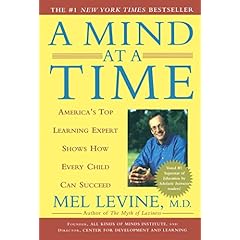
I am really pleased that we have been given the services of Schools Attuned again. Two days last week I had the opportunity to attend a workshop for the Schools Attuned program based on Dr. Mel Levine’s Neurodevelopmental constructs. The workshop, like many I have attended in the past, will most definitely leave a lasting impression on me. The Facilitator, Clare Wurtzel, introduced us to the “role of a facilitator” through two texts, “The Zen of Facilitation” and “Paying Doubles” (by Nancy Mohr).
I have never read either of the articles and found them both to be very rich. As the workshop progressed I realized so many things about facilitators of meetings.
Teachers teach the same way with adults and children. If you get a chance to lead a group of teachers you quickly fall back into the model you use in the classroom. This was so evident when teachers attempted to get the attention of the class by saying, “All eyes on me” or “We can begin when all the pens are down.” As we were sitting in the workshop each member got a chance to facilitate a piece of the “Schools Attuned” curriculum. I know I personally fell into my “QHST” mode when it was my turn to present. (I passed out activity guides…..I’m such a geek)
Teachers love to hear themselves speak. Many people presented information here the same way they would in their class. Teachers meeting without clear protocols get way too off topic. I applaud Clare for bringing us back, but educators love to share their personal struggle. (I switched to the word educator here purposely because most of the other participants were assistant principles.)
I would not do well in a traditional classroom. I felt uncomfortable. I was being talked to. I was being told where to look, “All eyes up here” - one person even flicked the lights to get the attention of the eleven participants. I could not follow the verbal directions, there were too many cooks. We had just read these two amazing articles and it seemed that the heart of the articles was being ignored.
Feedback is impossible without a protocol. One of the more enlightened participants of the group said, “I did not enjoy that you did the learning for us.” I was relived to hear that others were bothered. But I did not feel safe. I realized that without a protocol where everyone is mandated to give warm and cool feedback (like a CFG) giving cool feedback is way too awkward.
I look forward to sharing the new ideas I was introduced to during the workshop with my team. We are going to begin looking at the neurodevelopmental constructs after reading, “A Mind at A Time” by Mel Levine.
Tuesday, January 02, 2007
Smaller the Better?

The smaller the better?
(http://www.dailysouthtown.com/news/192012,312NWS1.article)
Sunday, December 31, 2006
New Years Resolutions

- Focus on the positive.
- Incorporate Schools Attuned vocabulary to my team.
- Tolerate Regents Prep
- Plan a Summer Program that expands on what we have already accomplished.
- Visit the Guggenheim.
- Utilize DLR and SmartBoard technology into the classroom.
- Fight the Filter.
- Model effective teaching strategies for student-teachers.
Friday, December 29, 2006
Does Homework Work?
From Alfie Kohn's website :

This is an excerpt from Alfie Kohn's recently published book The Homework Myth: Why Our Kids Get Too Much of a Bad Thing. For one teacher's response to this excerpt, read In Defense of Homework.
It may surprise you, as it did me, to learn that no study has ever demonstrated any academic benefit to assigning homework before children are in high school. In fact, even in high school, the association between homework and achievement is weak -- and the data don't show that homework is responsible for higher achievement. (Correlation doesn't imply causation.)
Finally, there isn't a shred of evidence to support the folk wisdom that homework provides nonacademic benefits at any age -- for example, that it builds character, promotes self-discipline, or teaches good work habits. We're all familiar with the downside of homework: the frustration and exhaustion, the family conflict, time lost for other activities, and possible diminution of children's interest in learning. But the stubborn belief that all of this must be worth it, that the gain must outweigh the pain, relies on faith rather than evidence.
So why does homework continue to be assigned and accepted? Possible reasons include a lack of respect for research, a lack of respect for children (implicit in a determination to keep them busy after school), a lack of understanding about the nature of learning (implicit in the emphasis on practicing skills and the assertion that homework "reinforces" school lessons), or the top-down pressures to teach more stuff faster in order to pump up test scores so we can chant "We're number one!"
All of these explanations are plausible, but I think there's also something else responsible for our continuing to feed children this latter-day cod-liver oil. We don't ask challenging questions about homework because we don't ask challenging questions about most things. Too many of us sound like Robert Frost's neighbor, the man who "will not go behind his father's saying." Too many of us, when pressed about some habit or belief we've adopted, are apt to reply, "Well, that's just the way I was raised" -- as if it were impossible to critically examine the values one was taught. Too many of us, including some who work in the field of education, seem to have lost our capacity to be outraged by the outrageous; when handed foolish and destructive mandates, we respond by asking for guidance on how best to carry them out.
Passivity is a habit acquired early. From our first days in school we are carefully instructed in what has been called the "hidden curriculum": how to do what one is told and stay out of trouble. There are rewards, both tangible and symbolic, for those who behave properly and penalties for those who don't. As students, we're trained to sit still, listen to what the teacher says, run our highlighters across whatever words in the book we'll be required to commit to memory. Pretty soon, we become less likely to ask (or even wonder) whether what we're being taught really makes sense. We just want to know whether it's going to be on the test.
When we find ourselves unhappy with some practice or policy, we're encouraged to focus on incidental aspects of what's going on, to ask questions about the details of implementation -- how something will get done, or by whom, or on what schedule -- but not whether it should be done at all. The more that we attend to secondary concerns, the more the primary issues -- the overarching structures and underlying premises -- are strengthened. We're led to avoid the radical questions -- and I use that adjective in its original sense: Radical comes from the Latin word for "root." It's partly because we spend our time worrying about the tendrils that the weed continues to grow. Noam Chomsky put it this way: "The smart way to keep people passive and obedient is to strictly limit the spectrum of acceptable opinion, but allow very lively debate within that spectrum -- even encourage the more critical and dissident views. That gives people the sense that there's free thinking going on, while all the time the presuppositions of the system are being reinforced by the limits put on the range of the debate."
Parents have already been conditioned to accept most of what is done to their children at school, for example, and so their critical energies are confined to the periphery. Sometimes I entertain myself by speculating about how ingrained this pattern really is. If a school administrator were to announce that, starting next week, students will be made to stand outside in the rain and memorize the phone book, I suspect we parents would promptly speak up . . . to ask whether the Yellow Pages will be included. Or perhaps we'd want to know how much of their grade this activity will count for. One of the more outspoken moms might even demand to know whether her child will be permitted to wear a raincoat.
Our education system, meanwhile, is busily avoiding important topics in its own right. For every question that's asked in this field, there are other, more vital questions that are never raised. Educators weigh different techniques of "behavior management" but rarely examine the imperative to focus on behavior -- that is, observable actions -- rather than on reasons and needs and the children who have them. Teachers think about what classroom rules they ought to introduce but are unlikely to ask why they're doing so unilaterally, why students aren't participating in such decisions. It's probably not a coincidence that most schools of education require prospective teachers to take a course called Methods, but there is no course called Goals.
And so we return to the question of homework. Parents anxiously grill teachers about their policies on this topic, but they mostly ask about the details of the assignments their children will be made to do. If homework is a given, it's certainly understandable that one would want to make sure it's being done "correctly." But this begs the question of whether, and why, it should be a given. The willingness not to ask provides another explanation for how a practice can persist even if it hurts more than helps.
For their part, teachers regularly witness how many children are made miserable by homework and how many resist doing it. Some respond with sympathy and respect. Others reach for bribes and threats to compel students to turn in the assignments; indeed, they may insist these inducements are necessary: "If the kids weren't being graded, they'd never do it!" Even if true, this is less an argument for grades and other coercive tactics than an invitation to reconsider the value of those assignments. Or so one might think. However, teachers had to do homework when they were students, and they've likely been expected to give it at every school where they've worked. The idea that homework must be assigned is the premise, not the conclusion -- and it's a premise that's rarely examined by educators.
Unlike parents and teachers, scholars are a step removed from the classroom and therefore have the luxury of pursuing potentially uncomfortable areas of investigation. But few do. Instead, they are more likely to ask, "How much time should students spend on homework?" or "Which strategies will succeed in improving homework completion rates?" which is simply assumed to be desirable.
Policy groups, too, are more likely to act as cheerleaders than as thoughtful critics. The major document on the subject issued jointly by the National PTA and the National Education Association, for example, concedes that children often complain about homework, but never considers the possibility that their complaints may be justified. Parents are exhorted to "show your children that you think homework is important" -- regardless of whether it is, or even whether one really believes this is true -- and to praise them for compliance.
Health professionals, meanwhile, have begun raising concerns about the weight of children's backpacks and then recommending . . . exercises to strengthen their backs! This was also the tack taken by People magazine: An article about families struggling to cope with excessive homework was accompanied by a sidebar that offered some "ways to minimize the strain on young backs" -- for example, "pick a [back]pack with padded shoulder straps."
The People article reminds us that the popular press does occasionally -- cyclically -- take note of how much homework children have to do, and how varied and virulent are its effects. But such inquiries are rarely penetrating and their conclusions almost never rock the boat. Time magazine published a cover essay in 2003 entitled "The Homework Ate My Family." It opened with affecting and even alarming stories of homework's harms. Several pages later, however, it closed with a finger-wagging declaration that "both parents and students must be willing to embrace the 'work' component of homework -- to recognize the quiet satisfaction that comes from practice and drill." Likewise an essay on the Family Education Network's Web site: "Yes, homework is sometimes dull, or too easy, or too difficult. That doesn't mean that it shouldn't be taken seriously." (One wonders what would have to be true before we'd be justified in not taking something seriously.)
Nor, apparently, are these questions seen as appropriate by most medical and mental health professionals. When a child resists doing homework -- or complying with other demands -- their job is to get the child back on track. Very rarely is there any inquiry into the value of the homework or the reasonableness of the demands. One prominent example of this sensibility is pediatrician and author Mel Levine, whose advice for dealing with kids who don't do what they've been told reads like a heavy-handed parody of early-twentieth-century scientific management -- except that he wants us to chart the "work output" of six-year-olds. Parents "need to take on the sometimes adversarial and perverse authoritarian role of taskmaster," he tells us. They should "set up and enforce consistent work times" and limit the hours that children spend on purely relaxing activities, which are "likely to be detrimental to output." Levine offers helpful examples of logs, charts, and bar graphs that should be posted in our homes so we can keep track of kids' productive output.
Someone who looks at children and sees (insufficiently productive) workers is unlikely to raise questions about the structural imperatives of schooling -- what kids are made to do, and why, and whether it is of any value to the kids themselves. Levine offers case studies of children who don't do their homework, but never once examines the content of the assignments to determine whether they're likely to be beneficial, let alone what basis there is for believing that homework in general is necessary. Our goal, as parents and teachers, is merely to maximize kids' "output," to make them more efficient at carrying out any instructions they've been given.
Sometimes parents are invited to talk to teachers about homework -- providing that their concerns are "appropriate." The same is true of formal opportunities for offering feedback. A list of sample survey questions offered to principals by the central office in one Colorado school district is typical. Parents were asked to indicate whether they agree or disagree with the following statements: "My child understands how to do his/her homework"; "Teachers at this school give me useful suggestions about how to help my child with schoolwork"; "Homework assignments allow me to see what my student is being taught and how he/she is learning"; and "The amount of homework my child receives is (choose one): too much/just right/too little."
The most striking feature of such a list is what isn't on it. Such a questionnaire seems to have been designed to illustrate Chomsky's point about encouraging lively discussion within a narrow spectrum of acceptable opinion, the better to reinforce the key presuppositions of the system. Parents' feedback is earnestly sought -- on these questions only. So, too, for the popular articles that criticize homework, or the parents who speak out: The focus is generally limited to how much is being assigned. I'm sympathetic to this concern, but I'm more struck by how it misses much of what matters. We sometimes forget that not everything that's destructive when done to excess is innocuous when done in moderation. Sometimes the problem is with what's being done, or at least the way it's being done, rather than just with how much of it is being done.
The more we are invited to think in Goldilocks terms (too much, too little, or just right?), the less likely we become to step back and ask the questions that count: What reason is there to think that any quantity of the kind of homework our kids are getting is really worth doing? What evidence exists to show that daily homework, regardless of its nature, is necessary for children to become better thinkers? Why did the students have no chance to participate in deciding which of their assignments ought to be taken home?
And: What if there was no homework at all?
If anyone has a copy of this book I would love to read this. Being on a split schedule I don't even like doing homework.
Wednesday, December 27, 2006
Immigrant Children Shielded From State Tests, but for Whose Protection?
“Put your pencils down!” Yannyn Suarez commanded her third-grade English-as-second-language class. “Eyes on me! Sit up straight!”...
Click and read the story above, don't forget to leave a comment!