Sunday, August 13, 2006

Student Exhibitions

The following was what Brian Eddelson, Social Studies Teacher QHST: Freire Small Learning Community shared with us during Summer PD on 8/8/06. I thought Brian's reflection on how to create a student exhibition was fantastic and wanted to share it with everyone.

Student Exhibition Assessment:

A forum where students showcase an understanding of content through exhibiting a creative piece of work. A student exhibition is a grand finale of many arduous hours of group research, preparation, resolved conflicts, and discovery learning. The rules and shape of an exhibition change from teacher to teacher. Class to class. But the objective remains consistent across the board –that students learn by “doing” and “showing”.

How To Create A Student Exhibition

I: Think Backwards

It’s always best to visualize what your end product is going to look like. Ask yourself - What will my students be creating? Will the end product be something tangible or abstract? How will my students be graded? What timelines will I set? How will I ensure everyone is learning?

These are all tough questions, but each is necessary to perform a successful exhibition. Surely the unexpectedwill arise from time to time, but the more you can visualize the details of your exhibition and what the endresult will look like, the more likely you will avoid glitches that take away from the overall experience.

II: Make It An Event

Students need to feel that the project is important. By promoting the exhibition as a big event students will buy into the idea of showcasing their work and their nervous anticipation will fuel their learning. Making the exhibition feel like a special event makes students feel they need to be more accountable for their work. A good technique is to keep reminding students how many days are left, etc. You might even want to have a countdown board. This is just one example; there are plenty of ways to make students feel how special the exhibition will be. But remember try your best to not disappoint. If you plan to invite judges - then do so. If you tell your students that the exhibition will be held in a certain place - then try your best to arrange it. However in the end, if the exhibition somehow does not turn out to be the big event you envisioned, your students still need to sense your enthusiasm. The more pride and enthusiasm you show for their work the more special the event will be for your students. Ultimately you make the event special. Everything else is icing on the cake.


III: Preparation & Organization


You don’t want to be putting out fires all the time. Being prepared and organized is vital to the success of your exhibition. Not only will you rely on your own notes, rules, etc.but also more importantly, the students will immediately sense the professionalism you display. The more professional your project is, meaning the moretime and thought you put into it, the more positive students will react and take your exhibition seriously. In fact, the less questions and concerns your students have, the more likely they get it!

For our exhibition, students created Civil War Newspapers. I asked the students to write from either the Northern (Union) or Southern (Confederate) perspective. I stressed how this was the main objective. I handed each of them a kit. Notice how prepared and detailed it is. This took me quite some time but it also saved me a lot of headaches. Students could refer to the kit to answer many of their questions freeing me up to facilitate the project (ensuring teams are progressing in research, etc.)

· A Title Page and Table of Contents

· Objective, Rules & Roles

· Grading Policy, Reward & Calendar

· Graphic Organizer

· Team Lists

· Reminders

· Student Accountability Sheets

· Progress Report

· Checklist

· Judge’s Rubric

***This is just one way of organizing your project. Handouts can look like anything. In fact, handouts might not be something you wish to include. Whatever works - works. However, one thing is for sure – students should feel from the onset that they have “some” grasp on demanding and challenging projects that require exhibitions.***

IV: Choose Wisely

It took me half a year before I even began to really figure out who my students were. Not just academically, but also as people outside the classroom. That is why that I suggest that if you are teaching students you are not familiar with that you only attempt exhibitions after at least a couple of months of the school year have passed. This is when I decided to do so and it was one of the best decisions I made.

There’s no doubt that group work is difficult but certainly has its rewards. When the time came to conduct my student exhibition project I was confident that random group selection would not be best for my students. So I chose 12 group leaders (4 in each class) as Chief Editors of the newspapers. These people were chosen not only on their prior academic achievements but also because they demonstrated leadership qualities that can rise up to such a challenge. I cannot stress the importance of choosing students who work well with others, learn from their mistakes and who know how to turnkey constructive criticism to their group members.

Each leader chosen got together and confidentially chose their members. At no time did the rest of the class ever know who was chosen when. In the end, the teams were very balanced and team leaders expressed that they were glad they were in control of group development. Our end product in such a short period of time illustrates how well teams worked together.

V: Don’t Teach. Guide.

It’s very easy to put on our teacher hats and do what comes naturally but in essence being a teacher during an exhibition pretty much conflicts will your objective of students learning by doing and showing. This is not to say teachers do not teach during student exhibition projects. Quite the contrary. Teachers actually do more work. When you take into account all the preparation a teacher puts into such a project and the depth of learning that comes out of a successful exhibition it is safe to say that teachers truly teach their hearts out. Yet to an observer this might be hard to see since the teacher’s role is best as facilitator and guide and not necessarily an all-knowing answer bank. I would argue that the teacher that is hard to find in the classroom is the teacher whose class is doing the most work. So be confident in guiding your students through exhibitions. Your preparation and set rules provide the necessary framework for student success, they will fill in the rest.

VI: Trust

This brings us to trust. It is key that you put trust in your project and in your students. It is easy to find yourself worrying day and night if your students can pull an exhibition off. Worrying about students is a sign of a caring teacher. More often than not students have a knack to surprise and usually surpass our expectations. As long as you continue to guide students and listen to their concerns, they will find a way to succeed. Placing trust in exhibition assessments will demonstrate a confidence that students will pick up on.

VII: Stick To Your Guns

Never change anything unless it is absolutely necessary. If you completely put trust in your project then you shouldn’t have to modify it. For example, avoid extending deadlines or altering rules during the project. Those are things you should change, if needed, after reflecting on the project in preparation for making improvements for the following year. Changing the project during the process might be the kiss of death. Students will feel that your flexibility equates to poor management and lack of confidence that the exhibition will be a success. Only you define what success means. If you stick to your guns, believe in the project, and demonstrate enthusiasm no matter the output, then students will feel it was a success.

VIII: The Judging Process

Students are the real judges in an exhibition. If you succeed in making them feel the exhibition is a special event and that their work is important and meaningful then you pretty much hit a homerun. A part of making an exhibition so special is having visitors critiquing student work. Knowing outsiders will judge them; students will hold themselves accountable for their work and do their best to standout.

Your rubric should be simple for both student and judge. Judges should stick to the rubric and try not to assess students on outside material.

Your communication with the judges before the event also must be consistently followed through. Several emails, phone calls, flyers, etc. should be presented to remind your busy judges of the big event.

And lastly, if possible, your judges should be an enthusiastic bunch. This is not to say they should grade similarly, but it is certainly an added bonus if judges, for the most part, are energized to see student work. For students, judge who wishes to be elsewhere stands out like a sore thumb.

Thursday, August 10, 2006

Summer PD


>

I received a forwarded email (a joke) from a friend yesterday that really got me thinking about how lucky I am to be in the place I am in right now. The “Joke” which I'm sure you have heard before is as follows:


A teacher dies and goes to Heaven. When she gets there she meets Saint Peter at the pearly gates.
Peter says to her, "Welcome to Heaven. Let me giveyou an orientation first."
.

So Peter takes her to some beautiful houses.
The teacher asks, "Who lives here in these beautiful houses?"
.

"These are for doctors. They did a lot of good on Earth so they get a nice mansion," replies Peter.
.

Peter takes the teacher to some more mansions. These were more magnificent than the first.
.

"Wow, who lives here?"
.

"These mansions are for social workers. They did alot of good on Earth, but didn't make a lot of money so they get a better house." Peter takes the teacher to some more mansions. These are the most gorgeous homes she had ever seen. They have huge columns, well manicured lawns, beautiful stained glass windows - - - the works!
.

"These are the most beautiful homes I have ever seen," exclaims the teacher. "Who lives here?!"
.

"Teachers live here," says Peter, "they did much good on Earth and received very little money, so they get the best houses in all of Heaven."
.

"But where are all of the teachers?" inquires the teacher.
.

Peter answers, "Oh, they'll be back soon. They're all in Hell at a faculty meeting."

.

Although faculty meetings at some schools might be viewed as Hell, our meetings are interactive and time flies by. I have been through the "hell" meetings at previous teaching assignments and my only regret is I did not recognize sooner that the school is a place where teachers are the professionals. We need to be the ones sharing our expertise. Meetings need to engage the teachers and be generated by our respected colleagues. If student-centered classrooms are the expectation in our classrooms then teacher-centered faculty meetings must be our means of staff development.

PS> Advisoy link ------>Here

Friday, August 04, 2006

Teeth


Not only do we get to know the students well through our model of small learning communities but fortunately we get to know the teachers just as well.

This is “Year Four” of the Queens High School of Teaching. When I first arrived here ( Year Two) I immediately thought to myself, “Wow!... I’m lucky I got onto the staff when I did, why would anyone leave this teaching environment?”

Now that Y4 is dawning my original contention has not changed. I do recognize our school is not for everyone. Some students will be overwhelmed by the expectations of cooperative group work placed upon them when they cross the threshold of our institution. Some parents will undoubtedly be overwhelmed by the unparalleled desire to maintain mixed abilities cohort classes within a set small learning community. I can sympathize with the struggle new students and their parents must face with these breaks from tradition. What perplexes me is the need for teachers/ counselors to move on.

Granted our school expects much from its staff. There is a sense of a developing professional culture mandated, not from the administration, but from our own colleagues that seems to pervade conversations throughout the building. Because of this “professional culture” there is not much “downtime” between August 7th and June 28th.


Are teachers leaving for greener pastures?


Do suburban schools offer the same opportunities to make revolutionary changes in society?

Are traditionally formatted schools such a draw for professional reflective teachers?

The colleagues that have decided to move on are teachers. They are good teachers. If they terminated their time with us and left the profession a void in the world of education would have to be refilled.

Reflecting on their departures from my small learning community, I am internally struggling with what we (as a professional community) could have done to retain these colleagues and their expertise? How are we (our SLC) going to grow from this experience?

Could communication during SLC’s be improved by sticking to set protocols?

Should sharing of positive experiences we have had here during our school experience be more public and verbal rather than just share electronically at the end of the week? Should more attention be paid to the “Nay Sayers” and steps taken to help these struggling colleagues?

I imagine loosing a tooth for a child is a traumatic experience. A child never thinks they will not have the teeth they have come to depend on, the teeth that aided in nourishment through infancy and their toddler years. When I tooth falls out there is a hole left behind, there is some pain and there may even be some blood. It is definitely awkward. In time the tooth is replaced and new teeth emerge to fulfill the functions of the missing dental teammates.

I look foward to meeting the new teachers that will fill the holes on our teams.

My mom always said, “Take care of your teeth and they will take care of you.” I hope we as a community remember proper dental care and care for eachother.

Total Teachers can only exist in Total Schools.

P.S. Aren’t you glad I did not extend the metaphor any further and start talking about pulling teeth, oral surgery, caps, or braces? and what about those gold covered teeth with stars or dollar signs?


Thursday, July 27, 2006

What's Worth Fighting For in Our Schools


Ok I have never run an online discussion about a book, if anyone wants to email me walterbrown@gmail.com with suggestions I would much appreciate it.

I picked a couple of quotes from the book, shared a personal reflection or classroom experience inspired by the quote and tried to keep the discussion positive. I am not suggesting you need to keep the conversation positive however remember it is easier to complain than to see the value in something.

Chapter 1

There is simply not enough opportunity and not enough encouragement for teachers to work together, learn from each other, and improve their expertise as a community. (p.1)

Currently I am blessed with a situation where inter-visitation is encouraged, and time is set aside for team (grade level) planning. Although not everything is best done in teams having the option really lends to excellent morale in the school. I am not at all concerned with how I am perceived by my administrators, however each day I come to work and think to myself what will my teammates (specifically the English or Math teacher) think of me when they visit my class today?

However I have been in schools where this was discouraged. Using your “prep time” for professional development was something one administrator wanted to write me up for.

"This simultaneous bottom-up and top-down tension in bringing about reform is a symptom of fundamental dilemmas and problems in bringing about educational change." (p. 2) The authors identify six basic problems in this struggle:
1. Overload

2. Isolation
3. "Groupthink"
4. Untapped Competence (and the neglect of incompetence)
5. Narrowness in the teacher's role (and the problem of leadership)
6. Poor Solutions and Failed Reform

When I read this section so many things rang true. I always just neglected the incompetent teachers, and I personally felt like I was never given an opportunity to show I was competent. Decisions always seemed top down, and whenever a new reform was passed down from the incompetent top I was always very cynical and waited for the reform to “blow over”. I would publicly “yes” all the reformers to death to their faces then shut the door, and do what I had always been doing with my students. The conversation I had with my peers rarely focused on pedagogy. I was afraid to show my lack of understanding of the art of teaching. I honestly always thought the people I worked with were so much more advanced as teachers than I.

This first chapter really pointed out so many things that I have experienced. I didn’t know it at the time but all schools are not like this. My currently teaching assignment is one of an empowered staff that work alongside a supportive administration.

Chapter 2

"Many staff developments take the form of something that is done to teachers rather than with them, still less by them." (p17)

“Sitting through” staff development and “engaging in” staff development are two completely different things. I have “sat through” staff development. I been attentive and listened as teachers openly challenged the facilitator exclaiming “yeah but this will never work in my class” or “I do this already in my class I just don’t have a name for it.” I really became disenchanted with professional development because of all these negative experiences. Looking back on the experience, most of the concepts the facilitators were trying to get across were extremely progressive and valuable. However the facilitators forgot to take into account the “teachers” and people who were not ready to change their practice until the culture of the building changed.

Engaging in professional development is something completely different. Actively listening, reflecting on the experience, applying the new practices to lessons, adapting the suggested practices to fit your style and then freely becoming immersed in the vernacular as to better converse with your colleagues is something far more than “sitting through” a PD session. Professional development sessions are finite learning experiences but when effective are starting points for new innovations pedagogy that become common traits of a school culture.

"You cannot understand the teacher or teaching without understanding the person the teacher is. And you cannot change the teacher in fundamental ways without changing the person the teacher is, either." Teaching is a function of the lives, the biographies, and the people the teachers have become. (p25)

Ok, I struggle with this all the time. I am undoubtedly a workaholic. I have often been accused of neglecting other obligations because my mind is “always on school.” I often get frustrated when others are not at the same level of passion about teaching as me. Just because a colleague does not appear to me to be giving 110% of them self (even during the summer) does not mean they are not good teachers. I personally really have to work on this.

Chapter 3

“There are four kinds of ‘collegial relations amongst teachers.’ The first three are: (1) scanning and storytelling (2) help and assistance (3) and sharing. Each of these relations may be found in either individual or collaborative school sites, but each is relatively unreliable to affect long term changes within a school. The authors write at the most effective form of collegial relationships are ones that concern "joint work." (p.47)

In the past I’ve experienced the first three forms of professional relationships described. The creation of a ‘joint work’ relationship where all members carry equal weight in decision making, and all members are respected as voice bearers in the conversation has still eluded me. I am assuming that less pointing of fingers as to the failures of the school and more acceptance of the teacher responsibility in a school are the litmus test for a successful school environment.

I am hoping to becaome more involved in “joint work”. Unfortunately we as a team do slip back into placing blame on individuals who do not “buy into” the philosophy of our school. We point fingers and avoid working out the problems that distract us from “joint work”. Our team has set protocols that enable a group meeting to be a venue of the open sharing of ideas.

One thing that I am still questioning is; how do we know where our school is at? If you ask me, all schools upon reflection, especially anyone who is reading a blog about education over their summer break is in a “moving school environment”. The moving school environment is one that is collaborative and more open to other ideas. Those teachers involved in moving schools tend to be more helpful to colleagues, and many are not afraid to seek advice from administrators. Does everyone have to be a total teacher in a total school?

Chapter 4


1.Teachers need to develop and be certain of their personal values and goals in teaching. Once teachers have a clear understanding of what they want to accomplish in the classroom, the burdens and the complaining that is often associated with teachers can be diminished by focusing on what is important. Teachers thus need to be reflective in their thoughts and their practice by taking time to journal, conduct discussions with colleagues and students and to give evaluations so that they can ascertain whether their values and goals are being reached. And then once their values and goals are identified they need to be lifelong learners and participate in activities that help them reach those goals.

2. Teachers need to be risk-takers and to take steps, no matter how small, to foster change and growth. The authors are asking the teachers to be the first ones to try something for the good of the others at their school site.

3. This book encourages teachers not to be hermits and “balkanize” or segregate into their own teaching departments. They encourage teachers to share their ideas and experiences and especially how they have risked so that all can benefit from the knowledge of the staff. Teachers are to be leaders no matter what official role that they serve. Every teacher is an expert at something and that experience needs to be shared for the common good. Teachers need to support all their colleagues including their administrators.

4.Teachers should understand that their development is tied hand to hand with the development of their students. When teachers continue to improve and have desire to increase their realm of knowledge, the students will benefit from this and more development with occur in them.


All of these points put alot of the reform possiblilities and failures of schooling back on the classroom teacher.

Tuesday, July 18, 2006

No Sleep 'Til Brooklyn

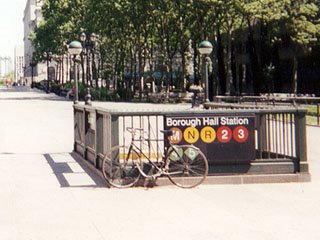
The Montessori Summer Program concluded this past Friday on the plaza in front of Borough Hall in Brooklyn. We all go into teaching searching for those fulfilling moments. Some teachers receive letters or visits from former students letting us know the impact we had on their lives. Friday was one of those experiences that will be stored in the memory banks of the students and teachers for years to come. I know personally next year around February, when I’m beginning to loose faith in the system, I will look back and reflect on this experience.

Currently I am reading “Whats Worth Fighting for in Our Schools” and at first glance the answer is simple to me ‘programs like the one we had this summer.’ It really was something special.

OK Brown, What was so special? Really nothing, the teachers took 48 students who for one reason or another were lacking in appropriate credit and decided to work 8 to 10 hours a day studying the Brooklyn Bridge. The intensive research was compiled into a book, published, and then distributed to the public by the students on the bridge. They also received instant feedback by on the booklets at http://www.brooklyn-bridge.blogspot.com/ .

Using the model of backward design by Grant Wiggins as abbreviated at the ISA Summer Institute during the Terry Borne curriculum workshop the teachers of the Montessori Small Learning Community developed an interdisciplinary masterpiece.

In a moment of complete serendipity I found myself sitting aside Jonathan Katz at dinner, and then attndeding his thematic workshop applying quadratic equations to the design of suspension bridges just 4 days prior to the launch of our project. He outlined how to get students to create blueprints then build their own models of suspension bridges. The teachers had been throwing around the idea of how to have the students create a model of a bridge but Katz really gave us the 'nutz and boltz' on how to accomplish this task.

The experience was incredible. We as a whole (teachers and students) applied quadratic formulas to graph parabolas and create blueprints for our own suspension bridges. We then became entrenched in the literacy of bridges. Words like: tower, vertical suspenders, anchorage, vertex, main span, side span, tetanus, caisson, and ratio all became part of our vernacular over the next nine days.

After watching Ken Burns’ documentary “Brooklyn Bridge” (which airs routinely on PBS) the team of bridge investigators began to look more closely at NYC during the building of the Brooklyn Bridge. Using primary sources such as Roebling’s engineering reports to the trustees of Brooklyn and NYC, and many articles from the Brooklyn Eagle our students began to piece together the controversial history surrounding the construction of the Brooklyn Bridge.

Also inspired by the video students began to look more closely at the steel making process, the tidal region of the “East River”, and the devastating effects of decompression disease.

If this sounds all too much to attempt in 9 days with students who struggle in traditional school I would have agreed with you. However on July 14th the students had completed the booklets and distributed them to an impressed public.
.
.
Why are we unable to do this during the school year?

Sunday, July 09, 2006

JULY'S BOOK

Ok well obviously I have not been blogging at the same reflective pace that I had been during the school year.

Here is an idea…lets read a book together. Like an online book club. The title of the book is What's Worth Fighting for in Your School? By by Michael Fullan, Andy Hargreaves,

You can purchase the book for under $5 at Amazon.com

We will begin a discussion around the book's main points and any reactions to the book on August 1st.