
Read the article------> here
Tuesday, February 20, 2007

Tuesday, February 13, 2007
Clearing Up Confusion

Proposed 2007/2008 QHST Time Schedule
| Session I Band Times | Session II Band Times | Session III Band Times | M | T | W | Th | F |
| 7:30 – 8:27 1 | | | | | | | |
| 8:30– 9:27 2 | 8:30– 9:27 2 | | | | | | |
| 9:30 – 10:27 3 | 9:30 – 10:27 3 | 9:30 – 10:27 3 | | | | | |
| 10:30 – 11:27 4 | 10:30 – 11:27 4 | 10:30 – 11:27 4 | | | | | |
| 11:30 —12:10 5 | 11:32— 12:10 5 | 11:32—12:10 5 | | | | | |
| 12:12— 12:50 6 | 12:10— 12:50 6 | 12:12 — 12:50 6 | | | | | |
| 12:54– 1:32 7 | 12:54– 1:32 7 | 12:52 — 1:32 7 | | | | | |
| 1:34– 2:32 8 | 1:34– 2:32 8 | 1:34– 2:32 8 | | | | | Early Dismissal – staff and students |
| | 2:34– 3:42 9 | 2:34 – 3:32 9 | | | | | Early Dismissal – staff and students |
| | | 3:34 – 4:32 10 | | | | | Early Dismissal – staff and students |
* Bands 4, 5, and 6 are forty-minute bands programmable for Lunch, Advisory, DEAR and Electives.
***Please notice this is exactly what we would be voting on if we accept the new SBO schedule change. 12 mins more at the end of the day on MON, TUES, WED, and THURS....and an hour early dismissal on Friday. There are no overlapping periods!!!! The name of the course in each time slot (DEAR, ADVISORY, ELECTIVE, BASKET WEAVING, LUNCH, MATH, HISTORY, or PROJECT LEARN) is not up for a vote.
WE as UFT members are only voting on the time structure. "Passing time" although a valid concern is not what this vote is about. We have the ability to affect START TIME and END TIME (when it changes fromo the UFT contract) .
We have the opportunity to have a much smoother programed school.
Please leave your comments here. Rememebr we are not talking about more DEAR, more ADVISORY or more CONTENT AREA "seat time", just a smoother non-overlapping schedule for our school.
Sunday, February 11, 2007
Skills and Content
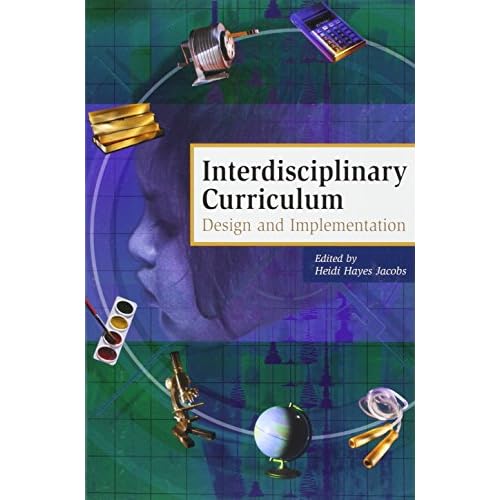
This weekend sparked by our professional conversations around our clear expectations of what needs to be taught in an annualized high school, I began looking through books I have in my home library. I remembered reading something by David Ackerman dispelling some of the myths of content driven instruction and the assumptions educators hold when down playing skills based learning. Although I know of no classroom that can teach either of these devoid of the other; I find often that content driven instruction is seen as a higher priority and therefore a more valued product when it comes to “grading” our students. In an annualized school where mastery of a skill is valued the following excerpt (from Integrating Thinking and Learning Skills Across the Curriculumn by David Ackerman and D.N. Perkins) might be something we would all wish to consider:
"The Entrenchment of the Conventional Paradigm
We can see that a rich meta-curriculum awaits any educators concerned enough to pursue it. However, if experience with education teaches us anything, it is that change often comes hard. Successful change demands appreciating the forces that foster and inhibit innovation. Among those forces are an array of beliefs about the adequacy of the conventional paradigm of education, that defend it even as they petrify it. While this is a large topic, for present purposes four familiar “misconceptions” seem especially worth commentary.
Misconception 1: Students already have these skills. Sometimes educators feel that there is no need to cultivate certain familiar skills, such as everyday decision making or problem solving. After all, these are part of life; why should they require schooling?
This posture is understandable, but it does not accord with research into the difficulties students and adults actually experience. Commonplace thinking processes, such as decision making, are often handled poorly; people commonly make decisions without searching for creative options. Also, people usually tackle problems without analyzing their essence, a powerful move that often reveals “back door” solutions. Just because students “get by” with decision making and other familiar skills does not mean they need no help.
Misconception 2: The subject matters already embody these skills. It is often believed that nothing specific need be done about many symbolic and thinking skills. Surely students can learn good writing by reading the great models of writing in the curriculum. Don't history books discuss the causes of events and encourage students to explore them? And, for those who do not catch on, well, what can you do?
Unfortunately, the circumstances are not so straightforward as these points suggest. First, abundant evidence shows that learners who do not catch on spontaneously often gain substantially from efforts to spell out the principles involved; it's simply not the case that students, even when well motivated, automatically learn to their capacity. Many of the examples of symbolic and thinking skills that students find in their texts are implicit models; research indicates that students often do not recognize the significance of the models but can do so with more direct help from the teacher.
In addition, content as usually taught simply does not embody many of the skills we would like to cultivate in students. History, for example, typically is taught as the story of what happened, not as a chain of human decision points or the manifestation of complex interacting systems. While students get ample exposure to narrative and descriptive organization, they get hardly any exposure to close argument or to forms of symbolic representation such as concept maps.
Misconception 3: Skills are for elementary education and content for secondary education. Perhaps this is not so much a misconception as a tradition. Although the statement certainly reflects practice, few would defend it. Plainly, young children have the capacity to learn a great deal of content, and older children often show substantial shortfalls in higher-order skills. The two mesh so nicely that there is little point in segregating them from one another. Indeed, this point leads to the next.
Misconception 4: There is a time and resource competition between the curriculum and the metacurriculum. Most often, this surfaces as a commitment to coverage. How can I cover the textbook if I take time out to do concept mapping or decision-making activities?
To be sure, there would be a genuine time and resource competition if one set out to fill hours a day with metacurriculum content in place of curriculum content. But this would actually be difficult to do even if you wanted to: You can't pursue decision making or concept mapping very far without addressing contexts of decision or concepts to map, and those contexts and concepts might as well come from the curriculum. No doubt, it is possible to have an imbalance. But the basic answer to this concern is that a well-designed metacurriculum is highly synergistic with the curriculum. Far from undermining students' learning of content, it deepens student understanding and retention.
A broad generalization from considerable research speaks to this point. There have been many efforts to enrich the curriculum with thinking skills or other metacurricular treatments. Sometimes there are marked gains in content-oriented measures; sometimes there is no significant difference in comparison with control groups. But it is very rare that there is less content learning in the innovative group. In other words, the metacurriculum often helps content learning and rarely does harm. The illusion of covering less is just that—an illusion. Perhaps fewer pages have been read, but the knowledge gains are almost always about the same or better. The topper, of course, is that gains in understanding and insight are often much greater with the innovative approach than with the standard one.
In summary, a number of reasons for supporting the conventional paradigm do not appear to be valid. Of course, even if all educators came to a more enlightened perspective, there are still many forces that stand in the way of integrating the curriculum with the metacurriculum, not least of them the additional effort required from teachers who are already overworked.
Accordingly, the integration of thinking and learning skills across the curriculum must be cultivated not just through argument and inspiration, but through systematic examination of options and techniques that can make it practical on a day-by-day basis."
Excerpted from : Interdisciplinary Curriculum: Design and Implementation
Wednesday, February 07, 2007
“Let us have LETTUCE!”

We were both having a rough week to begin with. I(Jessica) found out that morning that I didn’t get an apartment I wanted in Manhattan, and yesterday I(Nahrin) got pulled over before school for a speeding ticket. The one thing that we were sure of that was going to cheer us up was a QHST cheese sandwich. Yes…cheese sandwich.
We have to admit, these cheese sandwiches have changed over the last few months. They went from being big, juicy, cheesy sandwiches with all the works with lettuce, tomatoes, and cucumbers, to scrawny little whole wheat bread with a slice of cheese. But somehow, they just seem to hit the spot.
So Wednesday afternoon, we went down to the cafeteria to purchase one of these infamous delicious sandwiches. Long story short…I (Nahrin) paid $3 for the sandwich and no fries. While paying, I(Jessica) grabbed the tray and walked down to the salad station to get a little bit of lettuce that is no longer served in the sandwich. Jessica then picked up the tongs, reached them into the lettuce bin when all of the sudden she heard the echoes of the lunch lady. The lunch lady then continued to scold us. We were mortified, appalled, and embarrassed that we were being reprimanded in front of the students that we teach for taking some lettuce!
We obviously didn’t want the situation at hand to escalate and in order to avoid confrontation we politely talked to her about how two pieces of lettuce is not included in our $3 meal and asked her for a “free” packet of mustard.
Although we do love our cheese sandwiches, we do not love being spoken down to in front of our students by other staff members. This is not the first incident. In the past, we have been told that as teachers we are not allowed to take a spork!
We understand that teachers are not entitled to free meals and that everything is accounted for in the cafeteria. We are NOT asking for free lettuce! We are just asking for a little respect. The students themselves were shocked by the situation. We hope that by avoiding confrontation we set a good example for them for the future when they are denied some lettuce.

Signed-(Still very hungry and very dissatisfied from their lunch)
Chowdhury and Goldberg
Tuesday, February 06, 2007
Everybody in the Pool
This past summer my four year old son attended swimming lessons at his over priced day-camp. He loved the 3 hours a week. There were four other students in the class with him, and two lifeguards “teaching” him how to swim. The course had one objective – to teach each student how to swim. On the last day they had a celebration (it was more like a pool party) and each student showed off what they had learned.
Each student learns at their own pace. If you were to grade each student after the first week my son would fail along with two others while Zach (the Mark Spitz of the class) took to the water like a fish. I later found out that Zach has a pool in his backyard. Zach came to the pool already knowing how to swim and provided a model for the other students.
By the second week all but one student could float on their backs and hold their breath underwater. One student was still afraid.
By the third week my son was showing an aptitude for swimming. His instructor commented how quickly he was picking up all the techniques presented. I found out from the other parents that their children too were doing well.
On week six all four students could swim. Zach had improved his skills remarkably; my son was definitely excited about showing off his new found ability. Even the water-phobic Jake was paddling away.
This morning at SLC we spoke at length about annualized classes here at QHST. One comment I overheard was, “I won’t be able to pass some of these kids… [students had already failed two quarters]… no matter what they do now.” I quickly thought back to my son after the first week of his lessons. Imagine if the instructor quit on him after his first week. Or quit on Jake at the half way point. The academic year is only halfway complete. Like Zach, some students come to our classrooms with more skills than others. They already know how to “swim” through our academic classes. Our goal is to have all our students reach identifiable goals by the end of the academic school year. We need to make our goals clear. We need to allow time for mastery and shift our mindset from “our students will never learn this” to “our students have not learned the skills yet.”
The classroom is not a “job” and students are not “workers.” Our students are learning skills, not just earning credits. The credits do not come out of our bank account. We can’t fire them for past performance. Each student learns at his or her own pace. In our school’s concept paper allowing time for mastery of a subject area is a cornerstone of our philosophy. Annualized classes are a natural way of achieving these ends.
Each student learns at their own pace. If you were to grade each student after the first week my son would fail along with two others while Zach (the Mark Spitz of the class) took to the water like a fish. I later found out that Zach has a pool in his backyard. Zach came to the pool already knowing how to swim and provided a model for the other students.
By the second week all but one student could float on their backs and hold their breath underwater. One student was still afraid.
By the third week my son was showing an aptitude for swimming. His instructor commented how quickly he was picking up all the techniques presented. I found out from the other parents that their children too were doing well.
On week six all four students could swim. Zach had improved his skills remarkably; my son was definitely excited about showing off his new found ability. Even the water-phobic Jake was paddling away.
This morning at SLC we spoke at length about annualized classes here at QHST. One comment I overheard was, “I won’t be able to pass some of these kids… [students had already failed two quarters]… no matter what they do now.” I quickly thought back to my son after the first week of his lessons. Imagine if the instructor quit on him after his first week. Or quit on Jake at the half way point. The academic year is only halfway complete. Like Zach, some students come to our classrooms with more skills than others. They already know how to “swim” through our academic classes. Our goal is to have all our students reach identifiable goals by the end of the academic school year. We need to make our goals clear. We need to allow time for mastery and shift our mindset from “our students will never learn this” to “our students have not learned the skills yet.”
The classroom is not a “job” and students are not “workers.” Our students are learning skills, not just earning credits. The credits do not come out of our bank account. We can’t fire them for past performance. Each student learns at his or her own pace. In our school’s concept paper allowing time for mastery of a subject area is a cornerstone of our philosophy. Annualized classes are a natural way of achieving these ends.
Monday, February 05, 2007
Words

Society's inequalities are reinforced in our classrooms through our perceived value on one social discourse over another. The dominant culture has created a "standard language" that any linguist as James Paul Gee points out in his work, "Social Linguistics and Literacies: Ideology in Discourses 2nd Edition," would note has no more value than any dialect. However in classrooms throughout NYC teachers are mandated to reinforce the economically dominant culture and their values through a test prep regiment that is admittedly flawed even by the most ardent supporters.
It is all about language. "Test Prep" classes for NYS Regents exams focus solely on the vocabulary of the test, and the format of the discourse. Being well verse in the language of the dominant culture will let you jump thorough the hoop of college acceptance. College acceptance and graduation will allow one to gain access to a white collar job, and the economic resources that perpetuate the system of the dominant culture.
The deck is stacked against students who do not have the dominant culture's language spoken in the home. Students whose home dialect does not closely aligned with the school valued code are quickly dismissed as inappropriate for school. They must either learn the language of testing from the teachers who take for granted there own success at jumping through the hoops, or fail the standardized tests.
The sole purpose of the NYS Regents exam is to create a gate keeper into the world of the dominant culture. It is in the best interest of the writers of standardized exam to perpetuate the myth of "right and wrong" discourse.
The successful "dominant culture" student is actually limited by the schooling system that does not allow him to see the value of the dialects that are not standardized. Essentially upper-class students grow up learning only their own English (the language of standardized tests and successful school discourse.) The student whose community speaks the non-standard English (the evolved form of the English language that fits needs and better allows for expression of non-dominant value systems) is able to speak and read two languages upon graduation. The dominant culture and that of its own community based culture.
The irony is the dominant culture has a more limited language because it evolves slowly and must not upset the social applecart as it changes. Roles of gender, race and ethnicity must remain in play in order for the dominant culture success stories to remain successful. The purveyors of dominant culture are winners at the game they have created and are of course going to be slow to change the rules.
It is all about language. "Test Prep" classes for NYS Regents exams focus solely on the vocabulary of the test, and the format of the discourse. Being well verse in the language of the dominant culture will let you jump thorough the hoop of college acceptance. College acceptance and graduation will allow one to gain access to a white collar job, and the economic resources that perpetuate the system of the dominant culture.
The deck is stacked against students who do not have the dominant culture's language spoken in the home. Students whose home dialect does not closely aligned with the school valued code are quickly dismissed as inappropriate for school. They must either learn the language of testing from the teachers who take for granted there own success at jumping through the hoops, or fail the standardized tests.
The sole purpose of the NYS Regents exam is to create a gate keeper into the world of the dominant culture. It is in the best interest of the writers of standardized exam to perpetuate the myth of "right and wrong" discourse.
The successful "dominant culture" student is actually limited by the schooling system that does not allow him to see the value of the dialects that are not standardized. Essentially upper-class students grow up learning only their own English (the language of standardized tests and successful school discourse.) The student whose community speaks the non-standard English (the evolved form of the English language that fits needs and better allows for expression of non-dominant value systems) is able to speak and read two languages upon graduation. The dominant culture and that of its own community based culture.
The irony is the dominant culture has a more limited language because it evolves slowly and must not upset the social applecart as it changes. Roles of gender, race and ethnicity must remain in play in order for the dominant culture success stories to remain successful. The purveyors of dominant culture are winners at the game they have created and are of course going to be slow to change the rules.
Thursday, January 25, 2007
What Happened to Monday?

“The Bush administration called on Wednesday for an array of changes to the president’s signature education law..[NCLB]. The proposals would give local school officials new powers to override both teachers’ contracts and…..”
Do you think “rating day” when all the exams have already been "rated" will be eliminated? And teachers will be forced to talk with each other in SLC meetings?
What is happening Monday? There may be a few mid-year Regent's Exams left to grade, but I am almost positive the majority of the teachers will be overwhelmend with boredom.
A plan was in place for non-instuctional, community building, among each of the three Small Learning Communities. Our school's unique structure thrives on the opportunties to reflect on our experiences and learn from eachother.
Just because the DOE is giving us the time to waste...does not mean we have to waste it. What is our professional responsibility?
Thursday, January 18, 2007
Ending on the Positive
Working in a small school with many able personnel can be challenging at times. Often people have so much effort and energy invested in the school that any criticism of school practices can appear to be personal attacks. I often become so overwhelmed with passion for the vision of the school that when differences of opinion on school issues arise I feel personally obligated to defend my view of “my” school.
I’m sure I could go on and on about how separating the “me” out of my philosophy of schooling is so important. But this is a positive blog…. (ps. I’m not good with the negative…)
As tough as it is to sometimes have personal conversations in a small school (at least for me) the benefit of sharing our work with each other is immeasurable. Seeing best practices is what I miss most since the loss of CFGs. In the last two days the freshmen team of the Montessori Small Learning Community has been able to sit in on two IEP meetings. One could not help but be impressed with the level of concern both the SETSS provider and the Gen Ed teachers had for both the parent and the student during each of these meetings. In the ten years I have been attending these type of meetings I have never once left an IEP meeting feeling like I did something good. Carmela changed this. Thank You Carmela. (ps. I know I cut people off quickly in conversation….I’ll work on that)
I also had the opportunity to walk through the Multicultural Exhibition presented by the Montessori Sophomore team. I was inspired with the sense of community the teachers and students have with one another. Many students were excited to show off their work and share their traditions, hopes, dreams and cultural traditions. Infusing math into the exhibition through informational posters was something unique.
Many articles we as a community have read warn us against a thematic approach to interdisciplinary work, but the sophomore team has shown it can be done. Thank You Montessori Sophomore Team for modeling how an effective team can come together with an eye-opening culminating event.
Below is a short video clip of the Sophomore Exhibiton. A keen eye will notice there are three pics out of place.
Wednesday, January 17, 2007
Regions, Tenure, and Unfair Funding : GONE?

Watching Mr. Bloomberg's first 20 mins of his State of the City address he laid out his idea for this year's educational policy.
1. empowering principals
2. eliminating the Regional offices
3. adjusting "tenure"..... not gone
4. funding students not schools aka Fiscal Equity.
Watch the speech mins 15-25 are focussed on education. CLick on the link...drag windows media player control to 15:00 and listen.
Thursday's NYTimes article. (yes, I scooped them by a day)
Sunday, January 14, 2007
Raising the Bar, Rigor, and HW

Mayo writes:
I'm reading The Homework Myth: Why Our Kids Get Too Much of a Bad Thing by Alfie Kohn. The book raises a lot of interesting issues about homework, and also about the supposed raising of standards. I've been uncomfortable with the way the word "rigor" has been tossed about so much lately. Some thoughts on the topic appear in the book:
"...some parents seem to figure that as long as their kids have lots of stuff to do every night, never mind what it is, then learning must be taking place. Educational quality is assumed to be synonymous with "rigor," and rigor, in turn, is thought to be reflected by the quantity and difficulty of assignments." (20)
Kohn writes about how the term "raising the bar" comes from showing horses and how that ought to cause us to stop and think. He adds:
"It's not just the etymology of the term "raising the bar" that should provoke questions, for example; it's the fact that this phrase signals an agenda of doing the same thing we've always done in classrooms, except now with fewer kids being likely to succeed. Almost a century ago, John Dewey reminded us that the value of what students do "resides in its connection with a stimulation of greater thoughtfulness, not in the greater strain it imposes." (122)
I'm wondering where most of QHST's teachers stand on the concept of "rigor" and on the homework question.
Subscribe to:
Posts (Atom)


